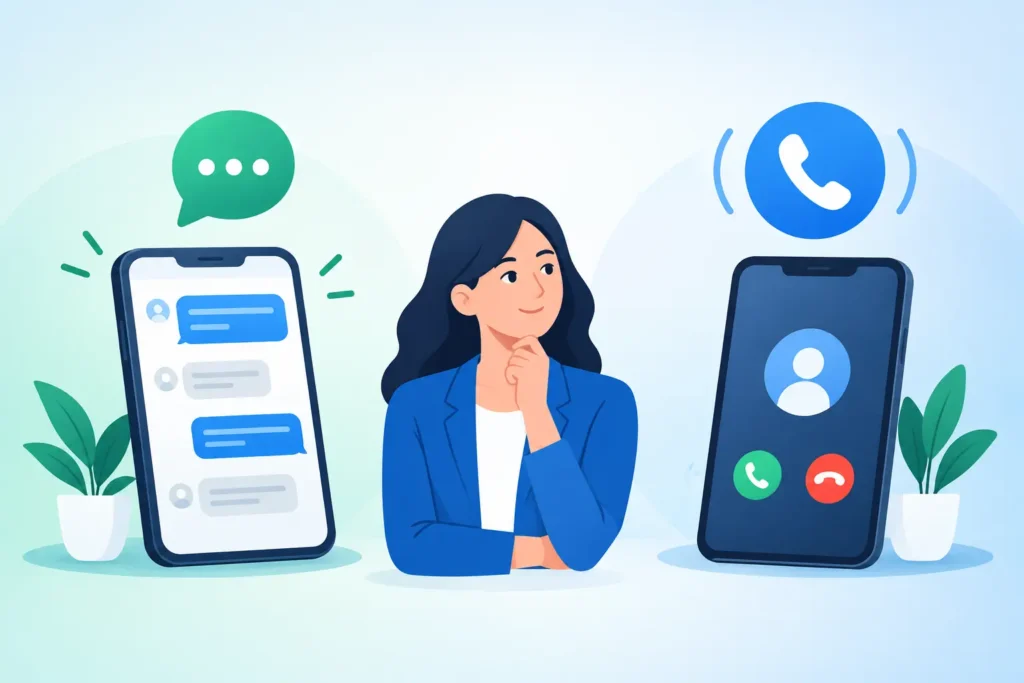
A customer calls your plumbing company at 7:18 PM. You are driving home from a water heater install, your office is closed, and the call goes to voicemail. The real decision is not SMS follow up versus calls as an either or choice. It is whether that customer hears from you before they call the next company.
SMS follow up wins when you need an immediate response to a missed call, while calls win when the lead is ready for a detailed conversation. The best local service businesses use text to recover the lead in seconds, then move qualified prospects into a call or booking when it makes sense.
What is the real difference between SMS follow up versus calls?
A phone call is still the fastest way to build trust when a homeowner has an urgent, complicated problem. A customer with a burst pipe, a failed furnace, or a garage door stuck open may need reassurance, pricing context, and a clear arrival window. One good call can turn a nervous shopper into a booked job.
But a missed call has a different job. Your first priority is not a perfect sales conversation. It is stopping the lead from disappearing. An SMS sent within 60 seconds gives the customer a clear sign that your business is available and paying attention.
Text also fits the way homeowners behave. They may be at work, in a meeting, managing kids, or standing in a noisy mechanical room. A short reply is easier than answering an unknown number. They can tell you what they need, share their ZIP code, and choose an appointment time without another round of phone tag.
Calls create connection. Text creates speed and continuity. You need both, but they should not carry the same part of the process.
When should you send SMS follow up first?
Send a text first whenever a new inbound call is unanswered. That includes calls missed during business hours, calls that arrive after hours, and calls that ring while your technicians are on job sites. The first 5 minutes are where many local service businesses lose jobs to a faster competitor.
Your initial message should be short, useful, and easy to answer. It should identify your business, acknowledge the missed call, and ask one simple question. For example: “Hi, this is Mike from ABC Plumbing. Sorry we missed your call. What can we help with today?”
That message does not pressure the customer to commit. It opens a conversation. From there, you can gather the service type, location, urgency, and preferred appointment time. If the job requires more detail, tell the customer you will call them. If they only need a standard service booking, keep the conversation in text and get the appointment on the calendar.
Text first is especially effective for estimate requests. A homeowner asking about a drain cleaning, AC tune up, or pest control visit may not want a 10 minute conversation. They want to know whether you serve their area and when someone can come out. Give them a quick path forward.
When do calls still win more jobs?
Calls win when the lead needs confidence, not just information. A homeowner facing a $1,500 repair decision usually wants to hear a capable person explain the options. Voice helps you uncover the real issue, answer objections, and set expectations for the visit.
Use a call when the customer reports an emergency, asks about complex pricing, has a commercial request, or seems uncertain after texting. A 3 minute conversation can prevent confusion that would take 12 messages to resolve.
Calling also matters when the job has a high average ticket. A roofing inspection after storm damage, a restoration project, or a full HVAC replacement deserves personal attention. The goal is not to force every lead onto the phone. The goal is to give high value and high urgency leads the attention that helps them choose you.
The timing matters. If a customer texts back at 9:30 PM, do not call unless they ask for it or the situation is urgent. Offer a call time, then follow through. Respecting the customer’s preferred channel makes your business feel organized before anyone arrives at the property.
Why speed matters more than your preferred channel
Owners often frame this as a choice between calling people back and texting them back. The bigger issue is response time. If your team returns calls 2 hours later, the lead may already have an appointment with another electrician, locksmith, or HVAC contractor.
A fast text gives you breathing room. It confirms receipt, starts qualification, and keeps the lead engaged while you finish the job in front of you. You are no longer hoping the customer listens to a voicemail and calls back. You have an active conversation in a channel they can answer when ready.
This is where missed call text back earns its keep. One recovered job can cover a monthly plan, especially in trades where a service call, repair, or small install can be worth hundreds of dollars. The cost of slow response is rarely obvious on a report, but it shows up in the work you never had a chance to quote.
Speed does not mean sending a generic auto reply and walking away. The follow up needs to move somewhere. Ask the right questions, offer realistic availability, and confirm the booking. If a customer stops responding, a second message 24 hours later can bring the conversation back without sounding desperate.
What should your SMS and call workflow look like?
Start with a simple rule: every unanswered inbound call gets a text immediately. Then use the customer’s response to decide whether to text, call, or book. This protects your team from chasing every lead manually while making sure real opportunities get attention.
For urgent service, acknowledge the issue, confirm the address, and offer the soonest available window. For routine work, ask a few qualifying questions and offer an appointment. For larger projects, collect the basics by text, then schedule a call or onsite estimate.
Your workflow should also cover after hours. A lead who calls at 10 PM may not need a technician at the door, but they do need to know whether you will respond. A clear text can set expectations for the next morning and prevent them from calling three more companies overnight.
MinuteLead, an AI agent platform for local service businesses, uses a team of 8 AI agents to handle missed call text back, qualification, booking, follow up, and more across customer conversations. It can be live in 48 hours. No app. No dashboard. No missed jobs.
The practical test is simple. Review your last 20 missed calls. How many received a response in under 5 minutes? How many became an actual conversation? How many were offered a booking? Those numbers will tell you whether your current process is recovering demand or letting it leak away.
Frequently asked questions
Is SMS follow up better than calling leads?
SMS follow up is better for immediate response after an unanswered call because it is easy for customers to see and answer. Calling is better when the lead has an urgent issue, a complex question, or a higher value project. Use text to start the conversation, then call when a call will help close it.
How quickly should I text a missed call?
Aim to send a missed call text back within 60 seconds. At that point, the customer is still actively looking for help and is more likely to reply. Waiting 30 minutes can be enough time for a homeowner to contact a competitor and book their first available appointment.
Should I leave a voicemail and send a text?
For most service leads, send the text first and leave a voicemail only when the situation appears urgent or the job value is substantial. A voicemail can add a personal touch, but a text gives the customer a quicker way to reply. Keep both messages short and focused on the next step.
What does missed call text back cost for a plumber in Dallas?
Pricing depends on call volume and the level of automation you need, but MinuteLead plans range from $297 to $1,297 per month, plus a one time build and onboarding fee. For many plumbers, one recovered drain, water heater, or emergency repair job can cover the plan. The useful question is how much one missed lead already costs you.
Can automated SMS follow up still sound personal?
Yes, if the message uses your business name, asks a relevant question, and gives the customer a clear next step. Personal does not require typing every message by hand at 8 PM. It requires responding quickly, being useful, and following through when you promise a call or appointment. That is how missed calls become booked work.