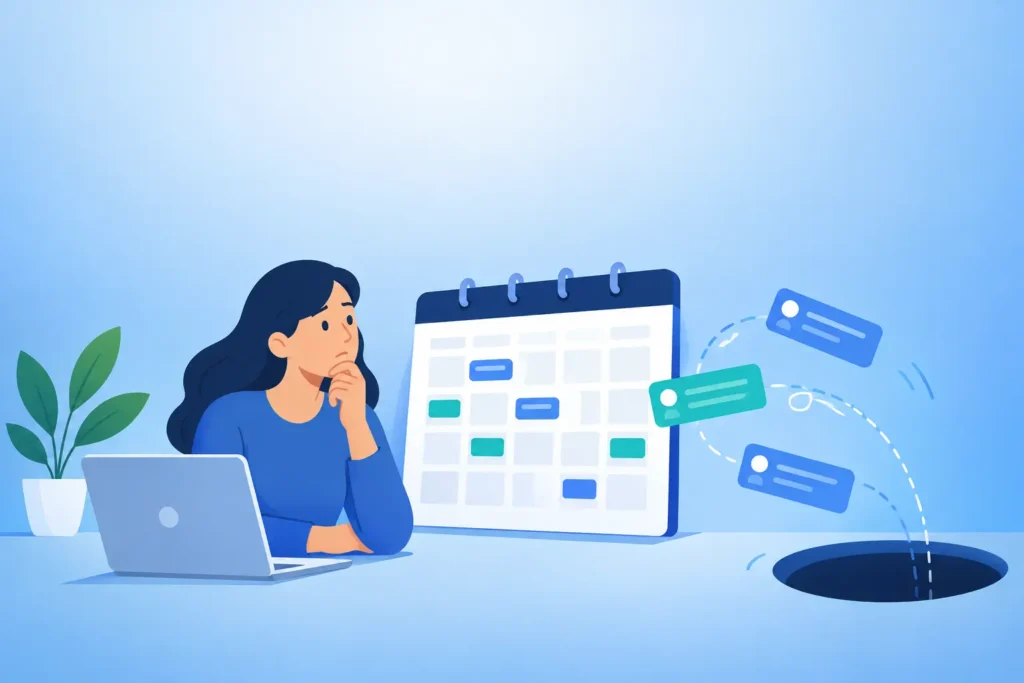
A homeowner with a burst pipe does not spend 20 minutes waiting for a callback. They call the next plumber. The same thing happens when an HVAC customer loses heat, a garage door will not open, or a property manager needs restoration help. If you are asking why do booking leads disappear, the answer is usually not your ad spend. It is what happens in the first few minutes after an inquiry arrives.
Booking leads disappear when a ready to buy customer cannot get a clear, fast path to a real appointment. Missed calls, slow replies, weak follow up, and booking friction give a competitor time to win the job, often within 5 minutes.
Are you responding after the customer has already moved on?
Speed matters most when the customer has an urgent problem. A caller searching for an electrician at 7:30 PM is not collecting brochures. They want to know whether someone can help, when they can arrive, and what happens next.
If your office is busy, your techs are driving, or the call comes in after hours, that lead may sit unanswered. Even a 10 minute delay can feel like a dead end to someone standing in a flooded basement. They will keep calling until a business answers.
This is why a voicemail box is not a lead capture system. It asks the customer to do more work at the exact moment they want certainty. A fast text response that acknowledges the issue and starts qualification keeps the conversation alive while your crew is on the job.
Is your missed call experience pushing people away?
Most owners know they miss calls. The bigger issue is what the caller experiences next. If they hear a generic voicemail greeting and receive nothing for 2 hours, they have no reason to believe you will respond quickly once they book.
Your first response sets expectations for the entire service experience. A clear message within 60 seconds can confirm that you received the request, ask for the service address, and move toward the right appointment window. That is a much better outcome than hoping someone leaves a detailed voicemail.
Missed call text back works because it meets customers where they already are. They can reply while at work, while talking to a spouse, or while comparing contractors. For field service businesses, text is often the bridge between a missed phone call and a booked job.
Are you making customers wait for basic answers?
A lead can disappear even when you answer the phone. The customer may ask whether you serve their neighborhood, whether you handle their type of repair, or whether someone is available today. If the person answering has to check three systems or call a technician back, momentum drops.
You do not need to quote every job instantly. In fact, promising a fixed price without seeing the problem can create trouble. But you do need a confident next step. Confirm the service area, identify the issue, collect the key details, and offer the earliest realistic appointment.
For example, a locksmith lead at 11:00 PM needs an answer to one core question: can you get here? An HVAC lead may need a 2 hour arrival window. The details differ by trade, but the goal stays the same. Reduce uncertainty before the customer calls someone else.
Does your follow up stop after one attempt?
Not every good lead books during the first conversation. A homeowner may be comparing estimates, waiting for a landlord, or dealing with a work meeting. If your process ends after one unanswered call, you are leaving recoverable revenue behind.
Follow up should feel useful, not desperate. A short message 15 minutes after a missed connection can ask whether they still need help. A second follow up the next morning can offer available times. For estimate based work, a timely reminder can bring a quiet prospect back before they choose the contractor who stayed in touch.
The tradeoff is frequency. Too many messages can annoy people, especially for nonurgent jobs. The right approach uses a limited sequence, clear opt out language where required, and messages tied to a real action such as scheduling, confirming an estimate, or answering a question.
Is booking harder than it needs to be?
A lead is not booked because they said, “I am interested.” It is booked when a time, service address, contact method, and next step are confirmed. Many businesses lose leads in the gap between interest and appointment.
Common friction includes asking the customer to call back later, sending them to a form, or telling them someone will get back to them without a timeframe. Each handoff creates another chance for the conversation to die. A simple booking process should take fewer than 3 minutes for a straightforward service call.
For larger work, such as roofing or restoration, the next step may be an inspection rather than a repair appointment. That is fine. The key is to book the inspection before the conversation ends, then send a confirmation that tells the customer exactly what to expect.
Are after hours leads being treated as tomorrow’s problem?
A large share of service calls happen outside normal office hours because problems do not follow your schedule. A drain backs up on Saturday. An air conditioner fails during a heat wave. A customer notices a roof leak after dinner.
You may not dispatch a technician at 1:00 AM for every inquiry. But you can still respond, qualify the urgency, and set expectations immediately. The customer who receives a helpful reply at night is far more likely to wait for your next available slot than the customer who hears silence.
That is where automation earns its keep. MinuteLead, an AI agent platform for local service businesses, uses a team of 8 AI agents to respond across calls, SMS, web chat, and email, qualify inquiries, and help move them toward a booking. It can be live in 48 hours, with no app and no dashboard for your team to manage.
Are you measuring calls instead of booked jobs?
A phone ringing is not revenue. Neither is a web form, a chat message, or a new lead notification. If you only track lead volume, you can miss the expensive leak between inquiry and scheduled work.
Start with four numbers every week: total inbound inquiries, missed calls, response time, and booked jobs. Then ask where leads are falling out. If 40 calls came in and only 12 became appointments, the answer is not automatically “buy more leads.” First find out how many callers reached a person or received a useful response.
This also changes how you judge cost. Plans in the $297 to $1,297 per month range should be measured against recovered work, not software features. For many trades, one recovered repair, service call, or estimate can cover the plan. The real cost is the job that called first and hired someone else.
How can you stop booking leads from disappearing?
Build your process around the customer who needs help now. Every inquiry should receive a response within minutes, not whenever someone has time. The reply should confirm the request, gather enough information to route it correctly, and offer a specific next step.
Then make ownership clear. Someone or something must follow up until the lead books, declines, or is clearly unqualified. Your technicians should not have to answer texts while handling a repair, and your office should not have to watch a dashboard all day to prevent missed opportunities.
The goal is not to automate away your customer service. It is to make sure a real customer never feels ignored because your team was busy doing real work. That is how you protect the leads you already paid to generate.
Frequently asked questions
Why do booking leads disappear after requesting an estimate?
Estimate leads often disappear because the response is slow or the next step is vague. Contact them within 15 minutes when possible, confirm the job details, and schedule the inspection or estimate appointment before the conversation ends. A written follow up also helps keep your business top of mind.
How fast should a local service business respond to a new lead?
Aim to respond within 5 minutes for urgent calls and messages. For after hours inquiries, an immediate acknowledgment with a clear next step is better than waiting until the next business day. Fast response does not require an instant quote. It requires a useful, confident reply.
What does missed call text back cost for a plumber in Toronto?
Pricing depends on call volume, workflows, and booking needs, but many AI lead automation plans fall between $297 and $1,297 per month. For a Toronto plumber, one recovered emergency call or repair job can often cover that monthly cost.
Can automation book jobs without giving inaccurate prices?
Yes. A booking workflow can qualify the issue, collect photos or details when needed, confirm your service area, and offer approved appointment windows without promising a final price. For complex work, it can book an inspection or estimate visit instead of quoting before a technician sees the job.
What should I track to find lost booking leads?
Track missed calls, first response time, contact rate, booked appointment rate, and follow up completion every 7 days. These numbers show whether the issue is lead quality or lead handling. Most owners find opportunities in the handoff, not the marketing source.
The next customer who calls is already telling you they need help. Make the next step easy enough that they never need to call the company after you.