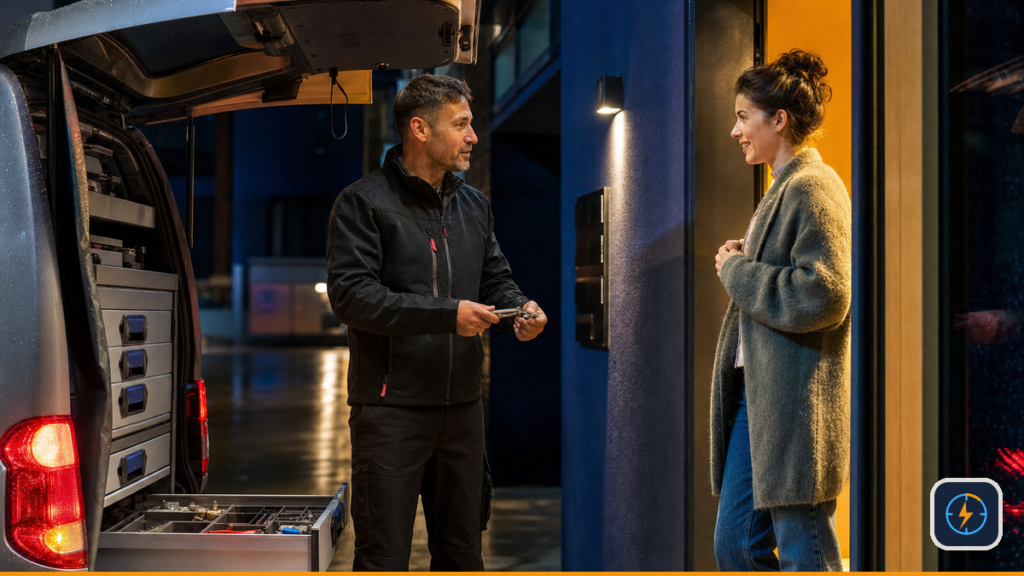
A lockout call at 11:42 p.m. is not a casual lead. It is a customer standing outside, phone in hand, ready to hire the first locksmith who answers or responds fast enough to sound available. That is why locksmith after hours lead response is not just a customer service issue. It is a revenue control issue.
Quick answer: winning locksmith after hours lead response means answering the 11:42 PM lockout in seconds, by voice or text, and booking it on the spot. Lockout customers hire the first locksmith who sounds available. If your response is instant, the job is yours before their second call connects.
Most locksmith shops lose these jobs in the same way. The owner is driving home, already asleep, or buried in another emergency call. The phone rings, goes to voicemail, and the lead moves on. There is no second chance in most after-hours situations because the customer is not building a vendor list. They need a door opened now.
Why locksmith after hours lead response matters more than daytime follow-up
During business hours, some delay can be forgiven. A property manager asking about rekeying an office or a homeowner pricing new locks may wait 15 or 20 minutes for a callback. After hours, the buying window is much smaller.
Night and weekend locksmith leads are usually high intent. Car lockouts, house lockouts, broken keys, urgent rekeys after a tenant issue, and commercial access problems all come with urgency built in. That urgency is good for conversion, but only if your business responds quickly enough to catch it.
The hard truth is simple. Speed often beats reputation after hours. A customer may prefer the company with better reviews, but if that company looks unavailable, they call the next number. The shop that replies first gets the conversation. The one that gets the conversation usually gets the job.
What customers actually expect after hours
Most locksmith owners assume customers only care whether someone can come out. That is true, but only partly. Customers also want immediate confirmation that their request was received and that a real response is happening.
If they call and no one answers, silence feels like a dead end. If they get a quick text asking what type of lockout they have, where they are located, and whether the issue is residential, commercial, or auto, that feels like momentum. Even before dispatch is confirmed, the customer knows they are not being ignored.
That small difference changes outcomes. A fast reply lowers panic, builds trust, and keeps the lead engaged long enough for booking to happen.
The real cost of slow locksmith after hours lead response
A missed after-hours locksmith lead is not just one missed phone call. It is lost revenue, wasted ad spend, and a competitor getting paid for demand you already generated.
If you run Google Ads, Local Services Ads, SEO, or directory listings, every missed nighttime call still cost money to produce. When nobody responds, you are paying to feed another company’s pipeline. That is the part many owners underestimate.
There is also a staffing cost. If after-hours calls go to whoever is available, response quality becomes inconsistent. One night your dispatcher texts back in two minutes. Another night nobody follows up at all. That kind of system works until it does not, and then it quietly leaks jobs every week.
For a locksmith business, even a handful of recovered after-hours jobs each month can materially change revenue. One emergency lockout, one rekey, and one ignition issue can more than justify tightening the process.
Where most locksmith shops break down
The breakdown usually is not effort. It is workflow.
The phone rings after hours and either nobody sees it, or the owner sees it too late. Voicemail collects the lead, but voicemail is passive. It puts all the work back on the customer. In urgent locksmith situations, that is a losing bet.
Some shops try call forwarding, but that can create a different problem. If the owner or tech is on another call, driving, or sleeping, forwarding does not solve the response gap. It just moves the missed opportunity to another phone.
Others rely on manual texting, which is better than nothing but hard to sustain. You cannot expect fast, consistent follow-up at 10 p.m., midnight, and 5 a.m. if it depends on one person remembering to do it every time.
That is why after-hours lead handling has to be a system, not a habit.
What a strong after-hours response process looks like
A good process starts the moment the call is missed or unanswered. The lead should get a fast text response that feels direct, local, and useful. Not a generic auto-reply. Something that moves the job forward.
For locksmiths, that usually means asking the right first questions: what kind of service is needed, where the customer is located, whether it is auto, residential, or commercial, and how urgent the issue is. Those details matter because they help qualify the lead and route it properly.
The next step is just as important. Once the lead replies, the conversation should continue without delay. If you can book the job, give the customer a clear next step. If coverage is limited by service area or time, be upfront. Fast honesty beats slow ambiguity.
This is where many businesses get the balance wrong. They either over-automate and sound robotic, or under-respond and lose the lead. The goal is not to impress people with technology. The goal is to keep a hot lead from cooling off.
Speed matters, but relevance matters too
A one-minute response is strong. A one-minute response that asks the right question is stronger.
If your after-hours system sends the same message to every lead, you will still recover some jobs. But locksmith work is varied enough that context improves conversion. A customer locked out of their car needs a different path than a property manager asking for an emergency rekey after a tenant dispute.
That does not mean the process has to get complicated. It means your first reply should gather enough information to keep the conversation moving and enough structure to avoid wasting time on dead-end inquiries.
There is a trade-off here. Too many questions create friction. Too few questions create confusion. The right setup gets the basics fast, then hands off to booking or dispatch.
Why fully managed beats another tool
Most locksmith owners do not need another login, dashboard, or software setup sitting on top of an already busy operation. They need calls answered faster, leads followed up after hours, and booked jobs showing up without adding admin work.
That is why a managed approach makes more sense for a lot of service businesses. The value is not in having access to features. The value is in having the response happen consistently without the owner needing to babysit it.
No app. No dashboard. No missed jobs.
That kind of setup is especially useful in locksmith operations because the schedule is unpredictable. Some days the phone is nonstop. Other days the late-night calls come in bunches. Systems that depend on staff attention tend to fail under exactly those conditions.
A managed AI lead response process can handle the first contact immediately, qualify the inquiry, and keep the lead warm until booking is confirmed. For busy operators, that means fewer lost jobs and less after-hours chaos.
How to judge if your current after-hours response is costing you jobs
You do not need a consultant to answer this. Look at your missed calls between 5 p.m. and 8 a.m. Then ask three simple questions.
First, how many of those leads got a response within two minutes? Second, how many turned into actual conversations? Third, how many became booked jobs?
If you do not know the answer, that is the issue. What is not tracked usually is not managed.
You should also look at source quality. If your best leads come from emergency lockout searches and those calls often happen after hours, then weak response speed is hitting your highest-intent traffic. That is where the loss compounds fastest.
The business case is straightforward
Locksmith work is a speed business. The customer is urgent. The search is local. The decision is fast. Your after-hours response should match that reality.
A better locksmith after hours lead response process does not need to be complicated. It needs to be immediate, useful, and consistent. When that happens, more missed calls turn into conversations, and more conversations turn into booked jobs.
For shops that are tired of hearing voicemail fill up while revenue slips away, this is one of the cleanest fixes available. MinuteLead is built for exactly that kind of problem – recovering inbound leads in real time without adding more software to manage.
If your phone is still going quiet after hours while customers keep searching, the market is already telling you what to fix. The shops that respond first are not just being more responsive. They are getting paid first.
Frequently asked questions
Why does after hours response matter so much for locksmiths?
Because lockouts do not happen on a schedule. A customer standing outside at midnight hires whoever responds first, and price matters less than availability. Instant response is the whole sale.
How do you answer lockout calls at 2 AM without staying up?
Automate the response. An AI answering service answers around the clock, qualifies the lockout, quotes your standard call out, and books it, so you only wake up for jobs that are already yours.
What should a Toronto locksmith use for after hours calls?
A setup that answers instantly and books in real time across the GTA. An AI receptionist for Toronto service businesses covers nights, weekends, and holidays without an answering service bill.